619million
People living with low back pain worldwide.
Estimated for 2020. Low back pain is the world’s leading cause of years lived with disability.
Global Burden of Disease · 2023A point of view. A way to move.
For people too young to feel this old.
Coming soon: the Movement Manual, a downloadable guide to help you explore how far you can move comfortably and learn to control those movements. Join our newsletter for practical movement advice and first access at launch.
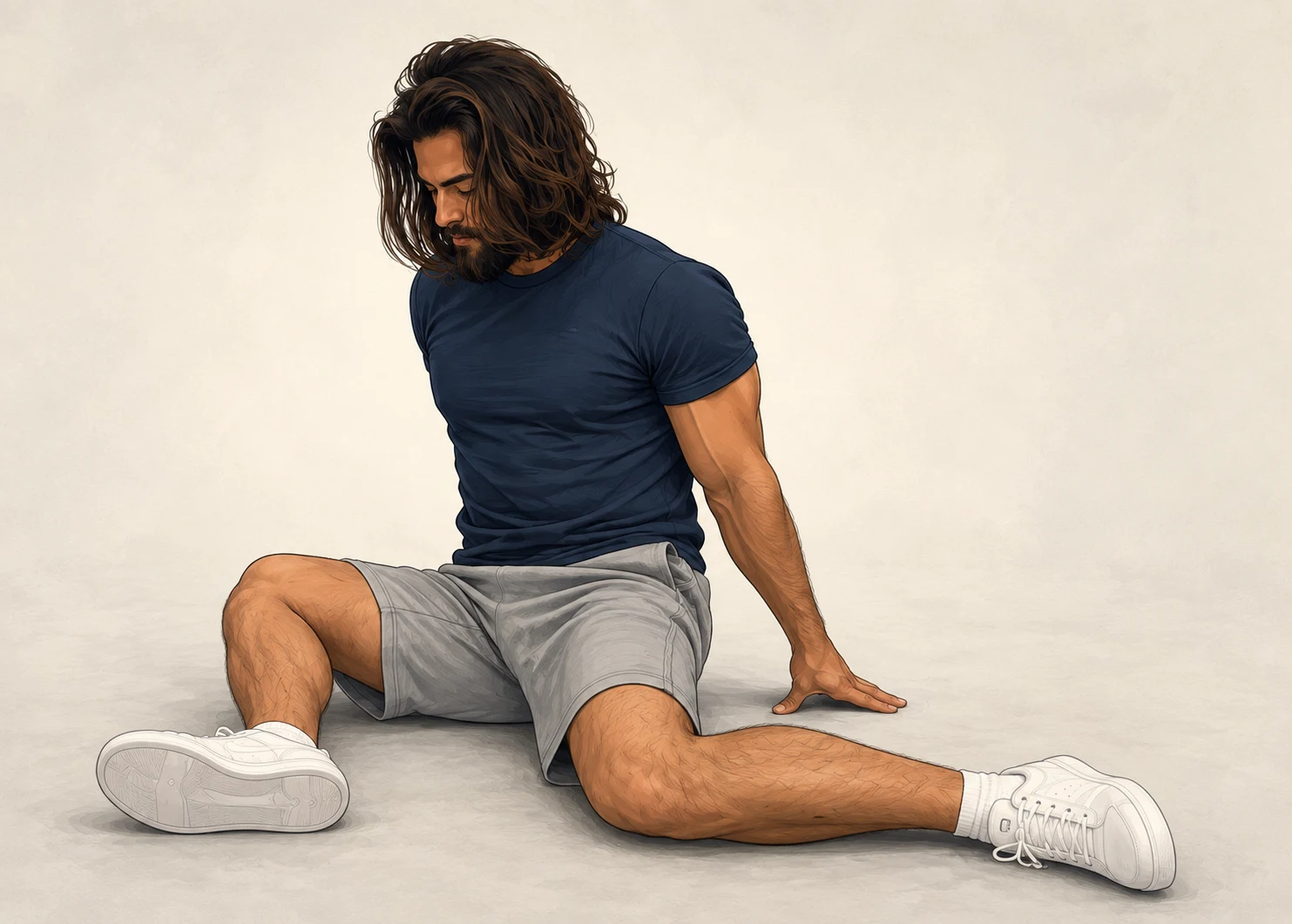
Getting onto
the floor
was easy.
Getting back up
became a
whole thing.
01 / An ordinary observation
It’s the little negotiations you start making with your own body.
It can be easy to start calling these moments “just getting older”—even when you’re still young.
The real-world scale
Pain can affect work, sleep, and time with family. These figures show how common back pain is—and how often chronic pain limits daily life.
619million
Estimated for 2020. Low back pain is the world’s leading cause of years lived with disability.
Global Burden of Disease · 202328.4%
U.S. adults aged 18–29 reporting back pain in the previous three months, in 2019. Back pain generally—not only the lower back.
CDC / NCHS · 2019 survey8.5%
U.S. adults with high-impact chronic pain in 2023. This covers chronic pain from all causes, not just back pain.
CDC / NCHS · 2023 surveyBy “movement loss,” we mean everyday movements becoming harder or less comfortable. These studies measure back pain and chronic pain; they don’t measure movement loss as a whole.
Read the evidenceThe days we live in
Globally, 31.3% of adults did not meet recommended aerobic activity levels in 2022, up from 26.4% in 2010. A U.S. study found average reported sitting time rose from 5.5 to 6.4 hours a day between 2007–08 and 2015–16.
A reason to act
Exercise and education are among the approaches WHO recommends for chronic primary low back pain, as part of care tailored to the person.
WHO · Care guideline · 2023Our forthcoming Movement Manual gives you a place to start practicing: nine movements in a clear order, with guidance on what you may feel and how to adjust.
General movement education. About the research and the Manual ↗
02 / The MANNER point of view
You can train hard and still feel locked up.
Strength and stamina matter. So does how it feels to bend down, get up, and move through your day.
Can you get down on the floor with the kids without first working out how you will get back up? Does a walk become a longer walk because moving feels good—or do you head home because it doesn’t?
And it is not only the things you skip. A day walking through a new city can become a countdown until you get to sit down. You go on the hike, but spend it thinking about how far you have left instead of looking around.
As Brandon puts it: “Sometimes your body starts ending an experience before you’re emotionally finished with it.” That is a cost of movement loss worth noticing.
Restricted movement can take up more of your attention than you realize: wondering whether something will hurt, planning how to get up, looking for the next place to sit. When moving feels easier, you can spend less time managing your body and more time enjoying where you are.
MANNER is a movement company. Mobility—how freely and comfortably you can move—is one part of that. Cardio helps you keep going. Strength helps you handle more. Balance and coordination matter, too.
The Manual is a place to begin. The bigger aim is to fall in love with movement and want more of it in your life. More walks. More time on the floor with your kids. More reasons to get up and go. A routine can help you start; the change we care about reaches into the rest of your day.
A body that can go more places—and feels better getting there.
THE MANNER LIST
Join Field Notes, the MANNER newsletter. Get practical ways to understand your body, research explained in everyday language, and first access when the Movement Manual launches.
03 / Our first product · Coming soon
Nine movements.
One session you can follow.
A downloadable guide that brings nine movements into two connected parts. You don’t need to know the names or be flexible to begin.
Built from Brandon’s own routine, it gives you an order to follow and explains what each movement asks of your body.
You’ll learn where you may feel a stretch, how to make small adjustments, and how to stay in control as you move. Clear instructions, anatomy illustrations, and beginner options will help you understand what you’re doing.
The aim goes beyond finishing a routine. It’s to help you understand and enjoy movement, so it becomes something you want more of in everyday life. The first edition is being made now.
Join the newsletter for first accessPRODUCT / 01
A body that can go more places—
and feels better getting there.
Barely notice the stretch? Change one thing.
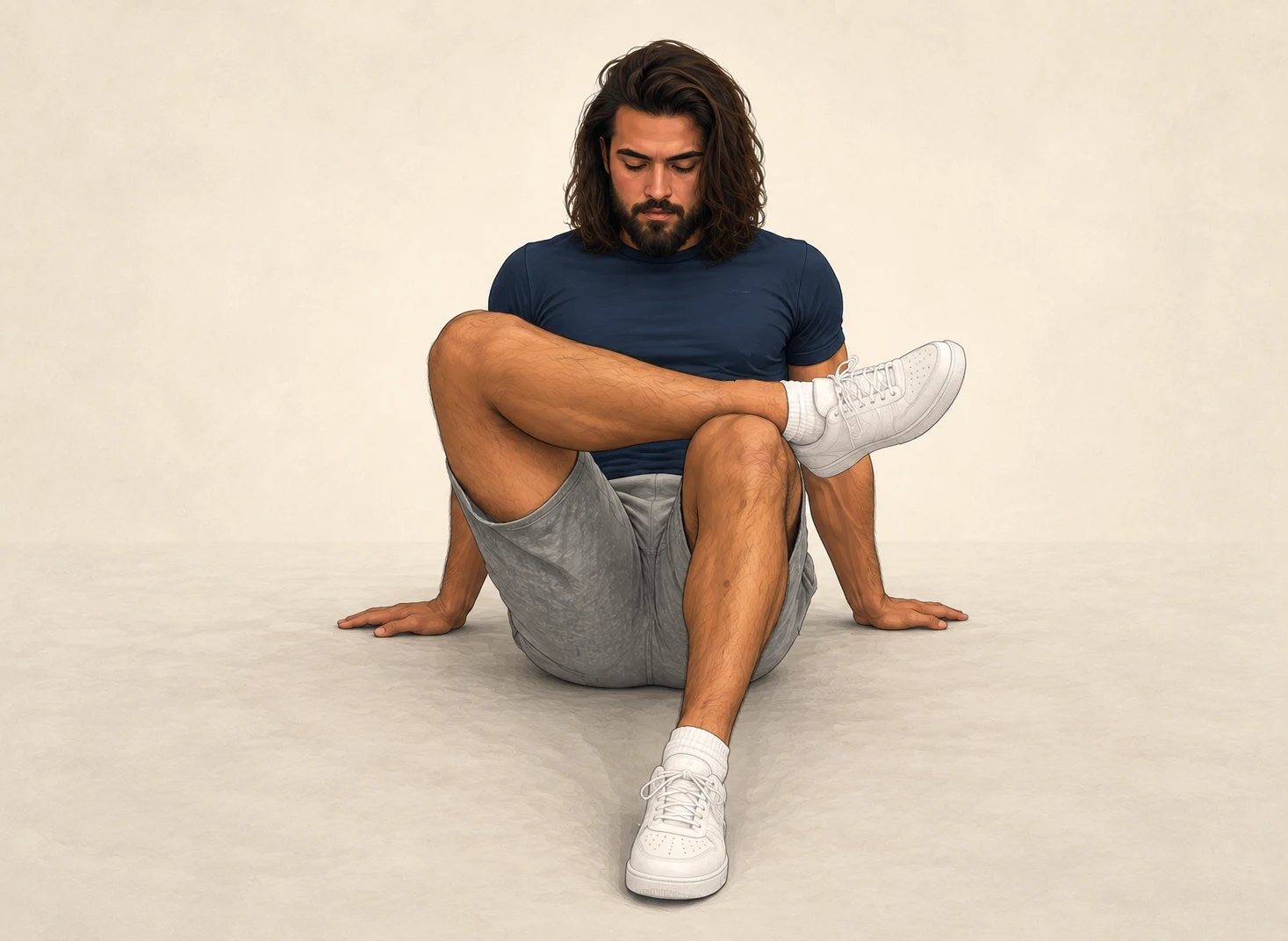
Keep your hands on the floor for support and change the angle of your upper body a little. Notice whether the stretch around your hip or buttock changes. Do not force the crossed knee down. Ease out if you feel sharp pain, shooting sensations, numbness or tingling.
Know the next movement.
Know what to pay attention to.
Finish the session and go lift—or go home. Either way, you’ve already made time to train movement itself.
04 / A way to move
The goal is not to reproduce a photo of a stretch. Explore each movement. Find how far you can comfortably go, learn how it feels in your body, and make small adjustments as you go. Think of it as a range you can explore, rather than a pose you have to hold perfectly still.
The “line of tension” is where you feel the pull of a muscular stretch. Small, slow shifts can change where you feel it. Breathe slowly, let go of tension you don’t need, and stay in control enough to ease out. You’re getting to know the stretch, not trying to make it as intense as possible.
Ease out if you feel sharp pain, shooting or electrical sensations, numbness, or tingling. If symptoms persist or concern you, speak with a qualified health professional.
05 / Founder note

He was helping his parents move things when picking something up brought on a familiar pain in his lower back.
Brandon crouched awkwardly to finish the job, then stood to straighten out and relieve it. He was 25.
“Familiarity wasn’t a good enough excuse this time.”
He refused to accept that this was how his body was going to feel for the rest of his life. That night, he started researching his lower back, his hips, and movements he could try.
The tedious part was searching through stacks of movements from what felt like a hundred different places and figuring out which ones fit together. It felt broken and incoherent. He took a list to the gym turf, then kept pulling out his phone to check the next move.
He tried them, added some, took others out, and changed the order. Gradually, the scattered pieces became a session he could repeat. As he learned his limits, he found he preferred small shifts and slow motion to holding perfectly still.
A diagram of the spinal erectors—the muscles running along the spine—helped him understand the area he had been feeling every day. He changed the angle of his upper body, breathed slowly, and felt the stretch in that familiar spot.
“There it is.”
The change came gradually, after a few weeks of making movement part of every day. It wasn’t complete relief after one stretch on day one. His back pain began to ease, getting off the floor became easier, and standing and moving started to feel natural again.
Then, one Saturday, he tossed his phone aside and got out of bed in an entirely new way.
“It felt like I just levitated up to my feet in zero gravity.”
He stopped in his tracks. He hadn’t planned it. His body had simply done it.
Eventually, there were days he preferred this to lifting. He liked doing the movements, and he liked how he felt afterward. That is the experience behind MANNER: movement is worth training and understanding—and it can become something you look forward to. The routine is a starting point for a life you want to spend more of moving.
This is Brandon’s experience, not a diagnosis or a promise of the same result for every body.
06 / Field Notes · Our newsletter
Field Notes is MANNER’s email newsletter: practical ideas for understanding and training movement, plus updates on the Manual. Useful whether or not you ever buy it.
A small change in angle can change where you feel a stretch. We’ll explain how to adjust one thing at a time and notice the difference, instead of always trying to reach farther.
Carrying a suitcase. Walking uphill. Spending a long afternoon on your feet. We’ll connect what you train to the things you want to keep doing.
We’ll explain studies on sitting, exercise, and pain: what they found, what they didn’t test, and what that could mean for your day.
Brandon will share how he’s building the guide, from choosing the sequence to making instructions easier to follow. Newsletter subscribers will get these updates and first access when the Manual launches.

THE MANNER LIST
Get Field Notes, our email newsletter, for practical movement advice, research explained clearly, and updates from Brandon. You’ll also get first access when the Movement Manual launches.